
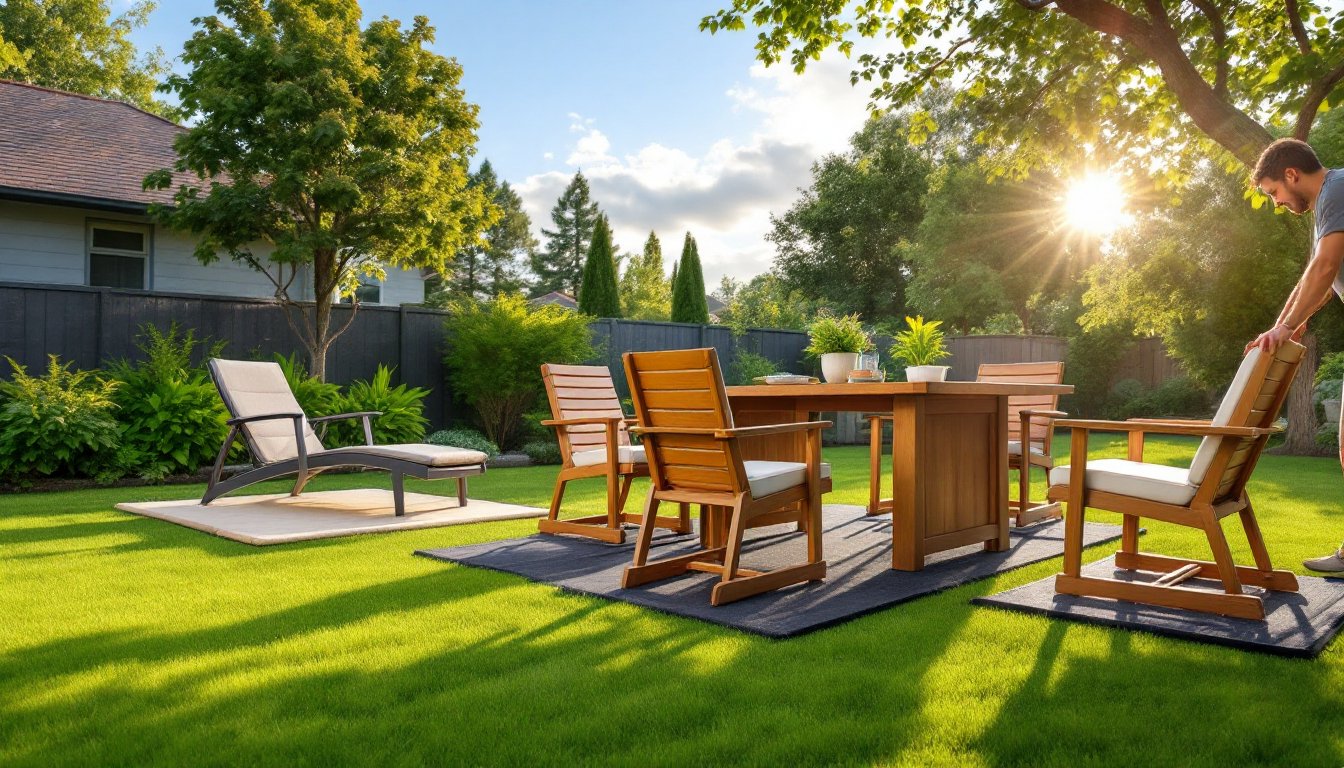
Placing patio furniture directly on grass seems simple, but it creates a host of problems most homeowners don’t anticipate until it’s too late. Furniture legs sink into soft soil, kill patches of grass, and wobble on uneven terrain, ruining both the setup and the lawn beneath. The good news? With the right preparation and material choices, grass and furniture can coexist without either compromising the other. This guide walks through everything needed to set up patio furniture on grass the right way, from site prep to ongoing maintenance that keeps both the furniture and lawn healthy for seasons to come.
Key Takeaways
- Patio furniture on grass requires protective pads and proper site preparation to prevent furniture legs from sinking, killing grass, and causing wobbling on uneven terrain.
- Level your lawn and check drainage before placing furniture; even minor slopes and water pooling will cause furniture to rock and accelerate decay.
- Use heavy-duty rubber or plastic pads at least 1/4 inch thick under all furniture legs, and replace them quarterly to prevent direct soil contact and compaction.
- Select durable furniture materials like solid hardwoods (teak, cedar), aluminum, or HDPE resin that resist moisture; avoid wicker, upholstered pieces, and thin-legged designs on grass.
- Rotate furniture at least 3 feet every spring and fall to allow grass recovery, clean debris monthly to prevent moisture trapping, and apply water-repellent sealant to wood annually.
- If grass continuously dies under furniture despite care, switch to ground cover or mulch options rather than fighting poor drainage or chronic soil compaction issues.
Why Placing Patio Furniture on Grass Requires Special Consideration
Grass is living, shifting terrain, nothing like a concrete patio. Furniture legs create concentrated pressure points that compact soil, block sunlight, and eventually kill the grass in defined footprints. Without intervention, those dead patches become eyesores and don’t recover quickly. Also, soft or wet soil means furniture never sits level, leading to rocking chairs that actually rock when they shouldn’t and tables that spill drinks at the slightest bump.
Moisture is another hidden culprit. Grass stays moist longer than hardscaping, and furniture legs trap moisture against wood, metal, or fabric, accelerating rot and rust. Wooden furniture, wicker, and certain metals all degrade faster in direct contact with damp ground. Finally, grass grows and shifts seasonally: spring growth can lift lightweight furniture, while winter settling creates new voids underneath. Planning ahead prevents these headaches and keeps both lawn and furniture in good shape.
Preparing Your Grass for Patio Furniture
Leveling and Grading Your Lawn
Uneven ground is the first enemy. Before placing any furniture, walk the intended area and look for high spots, low spots, and soft zones. If the grade drops more than an inch or two over a 4-foot span, the furniture will wobble no matter what you do. For minor unevenness, adding topsoil and reseeding is straightforward: spread a thin layer (no more than half an inch) of quality topsoil, rake it level, and let grass grow in over 2–3 weeks. For deeper dips, consider calling in a professional with grading equipment, it’s worth the cost if the lawn has significant slope issues.
Check the area at different times of day. Shaded spots may stay boggy longer than sunny areas, and morning inspection reveals water pooling that midday won’t show. If water consistently collects in the furniture zone, improving drainage becomes essential. This might mean installing a French drain or slope adjustment, something beyond a quick DIY fix but worth doing if the spot will host furniture year-round.
Protecting Grass From Furniture Damage
The simplest defense is a protective layer between furniture legs and soil. Heavy-duty plastic or rubber furniture pads (at least 1/4 inch thick) spread the weight across a wider footprint and prevent legs from sinking into soft earth. These cost just a few dollars per piece and are non-negotiable for any furniture sitting on grass. Felt pads don’t work, they compress immediately and offer no protection. Look for pads designed for outdoor use: indoor furniture pads break down quickly in UV and moisture.
For a more permanent solution, consider installing a ground cover membrane under and around the furniture zone. Landscape fabric blocks weeds and helps stabilize soil while still allowing water to drain. Lay it down, secure it with landscape staples, and cover it with rubber mulch or pea gravel to make it invisible. This approach works especially well for dedicated furniture areas that won’t be replanted with grass. Many homeowners also use this setup for patio furniture on grass ideas that involve seasonal rearrangement, mark the perimeter with invisible boundaries so furniture sits on protected ground.
Best Materials and Furniture Types for Grass
Not all furniture handles grass equally. Solid wood pieces with hardwood frames, teak, ipe, and cedar, resist moisture and don’t rot as quickly as softwoods. They’re pricey but worth it for permanent or semi-permanent setups. Metal furniture like aluminum is lightweight and won’t absorb moisture, but it can sink into wet soil faster than heavier pieces because the weight concentrates in smaller areas: use thicker pads under metal legs.
Wicker and rattan absorb moisture readily and belong on hardscaping only. Upholstered seating degrades fast on grass due to moisture wicking and mildew, reserve these for covered patios or bring them inside seasonally. Resin or high-density polyethylene (HDPE) furniture is practical for grass: it’s lightweight, won’t rot, and wears well. But, it still needs pads to prevent sinking and weight-related soil compaction.
For tables and dining setups, look for pieces with thick, durable legs rather than thin spindles. Thin legs concentrate pressure and can punch through soil, especially after rain. Glass-top tables can work, but the base frame matters more than the top. Lounge chairs and recliners are problematic on grass because they shift and rock more than static pieces, keep these on concrete or deck surfaces if possible. The takeaway: solid construction and wide-based furniture minimize damage to grass and last longer in outdoor conditions.
Maintenance Tips to Extend Furniture and Lawn Life
Rotating furniture every few months prevents permanent dead spots and distributes wear across the lawn. Move pieces by at least 3 feet every spring and fall, this lets grass beneath recover and prevents soil compaction from becoming chronic. If grass is already damaged under furniture, rake the dead material away, overseed that spot with a mix suited to your region and shade level, and water consistently for 3 weeks until new growth establishes.
Clean under and around furniture monthly during growing season. Debris traps moisture and blocks sunlight, accelerating grass death. A quick sweep with a stiff-bristled brush or blower clears fallen leaves and organic matter. For wooden furniture, apply a water-repellent sealant every 1–2 years (depending on the product and climate): this creates a moisture barrier that protects wood and reduces mildew risk. Metal pieces benefit from rust-preventive spray or touch-up paint where finishes wear.
Water the lawn normally, but do it in early morning so grass has time to dry. Wet grass under furniture stays damp longer, promoting fungal issues and rot. If the furniture is permanent and grass continually dies underneath, the underlying soil issue, poor drainage, heavy shade, or compaction, needs fixing. Consider switching to ground cover options like shade-tolerant plants or mulch in those zones rather than trying to maintain dead grass. Finally, inspect pads quarterly and replace any that compress or crack: damaged pads transfer weight directly to soil again.
Conclusion
Patio furniture on grass works when preparation and material choices come first. Leveling the ground, installing quality pads, selecting durable furniture, and maintaining both pieces and lawn keeps outdoor spaces attractive and functional. The small upfront effort prevents costly damage and replacements. A well-prepared lawn setup can last for years with minimal headache, and looks far better than struggling with wobbling furniture and dead grass patches.