
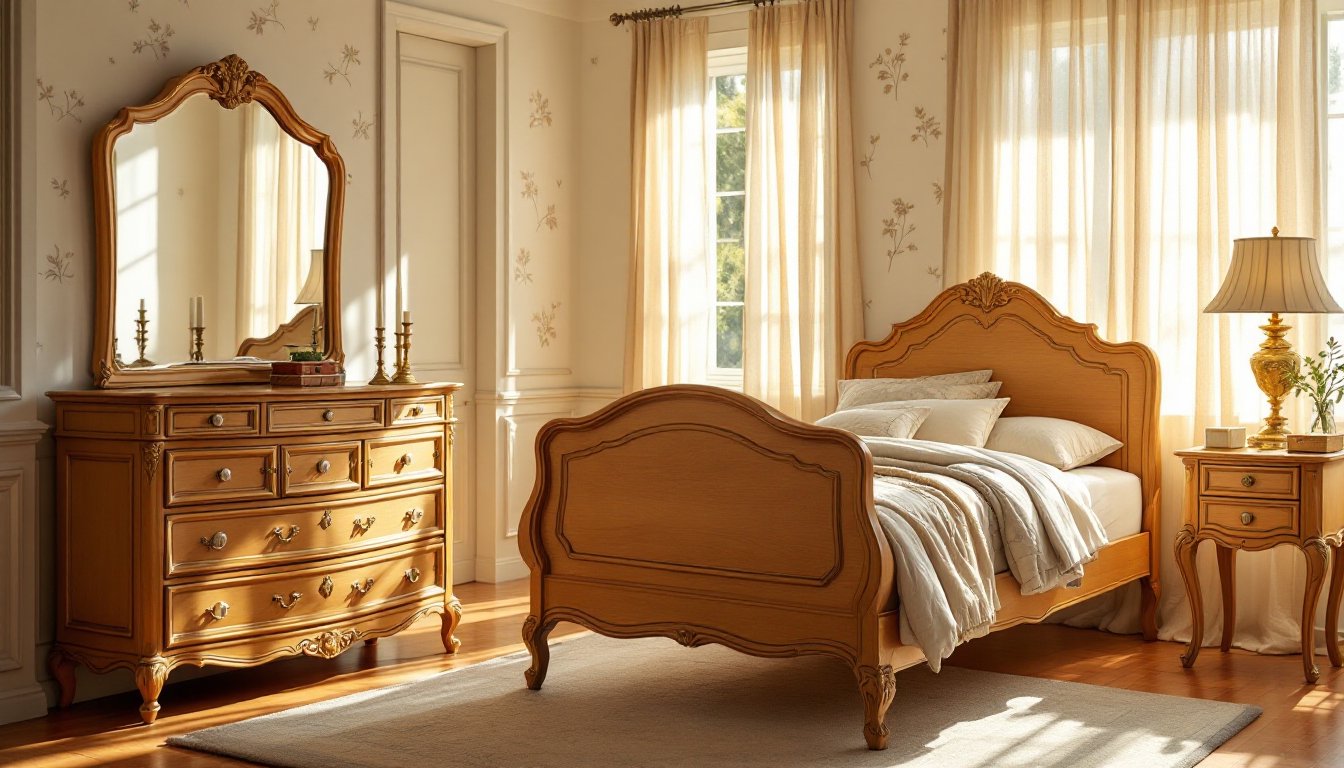
The 1970s brought a distinctive flavor to French Provincial design, blending classical European elegance with the era’s practical sensibilities. French Provincial bedroom furniture from this decade captures ornamental charm without excessive fussiness, think carved details, curved legs, and warm finishes that feel both nostalgic and inviting. Whether someone inherited a piece from their grandmother’s guest room or spotted a dresser at an estate sale, understanding what made 1970s French Provincial furniture special helps in decorating, restoring, or simply appreciating its enduring appeal. This guide breaks down the style’s defining characteristics, key pieces, materials, and how to incorporate vintage French Provincial furniture into modern bedrooms.
Key Takeaways
- 1970s French Provincial bedroom furniture combines classical European elegance with practical design, featuring curved lines, cabriole legs, and carved details that balance ornament with everyday livability.
- Authentic pieces from this era showcase lighter wood finishes like honey oak and walnut, hand-rubbed stains, and upholstered components in muted natural fabrics—materials that distinguish quality vintage items from reproductions.
- Signature furniture pieces include arched headboards with shallow carving, four-to-six drawer dressers with beveled mirrors, curved nightstands, and storage armoires built with solid wood frames and panel construction.
- Incorporating French Provincial furniture into modern bedrooms requires pairing vintage pieces with neutral bedding, warm lighting, and restrained accessories to honor the style’s emphasis on balance and breathing room over excessive decoration.
- When purchasing authentic French Provincial bedroom furniture, inspect for solid wood construction, functioning drawer slides, and structural integrity, then maintain pieces with regular dusting and appropriate wood oils to preserve their nostalgic charm.
What Defines 1970s French Provincial Style
French Provincial design draws inspiration from rural French châteaux and farmhouses, emphasizing graceful proportions, ornamental carving, and natural materials. The 1970s version stripped away some of the ornate excess of earlier eras while keeping the hallmark curved lines, cabriole legs, and decorative moldings that define the style.
This decade’s interpretation favored lighter wood tones, honey, walnut, and light fruitwood finishes, over the darker mahogany popular in earlier periods. Craftspeople incorporated simpler carving patterns and often added subtle upholstery details in coordinating fabrics. The result feels sophisticated without demanding constant maintenance or perfect museum-like conditions. Symmetry, balance, and functionality took precedence over pure decoration, making pieces more livable for everyday use.
The style also embraced mixed materials: wood frames paired with upholstered components, brass or wood hardware, and subtle textile accents. Curves dominate the design language, rounded corners on dressers, arched headboards, and gently bowed fronts, creating visual softness that contrasts with the straight lines popular in contemporary 1970s modern design. This restraint, combined with classical references, gave the style broad appeal across different tastes and home settings.
Key Furniture Pieces and Their Characteristics
Bed Frames and Headboards
French Provincial bed frames from the 1970s typically feature arched or curved headboards with shallow carved detailing. Many designs include low wooden footboards, sometimes just a decorative rail, sometimes with drawers for storage. The frame itself sits on cabriole legs (curved legs with an outward bow at the knee), usually scrolled or carved at the foot. Most frames accommodate standard full, queen, or king mattresses, though vintage measurements can vary slightly from modern springs and mattresses.
Headboards often rise 48–60 inches from the floor and may include upholstered panels in linen, velvet, or damask fabric. Carved details typically appear along the top rail and vertical stiles. Finishes range from honey-blonde oak to medium walnut, with some pieces featuring hand-applied stains that show grain variation.
Dressers, Nightstands, and Storage Solutions
The archetypal 1970s French Provincial dresser is a chest of drawers (usually 4–6 drawers) topped with a low mirror or beveled glass top. Drawers feature wooden knobs or small brass pulls, often shaped like shells or rounded bars. The front may have a subtle bow front (gently curved outward face) or straight edges with carved vertical fluting.
Nightstands are typically 24–28 inches wide and 24–30 inches tall, with one or two small drawers plus an open shelf below. Curved legs support the piece, and a surface top provides room for a lamp and personal items.
Storage chests, lingerie cabinets, and armoires round out typical bedroom suites. Many feature double doors with small adjustable shelves inside. All pieces emphasize proportional frame-and-panel construction, with solid wood backs and bottoms rather than thin plywood, a detail that distinguishes quality vintage pieces from cheaper reproductions.
Materials, Colors, and Finishes of the Era
Authentic 1970s French Provincial furniture relies on hardwoods: oak, walnut, fruitwoods like cherry and cherry veneer, and occasionally mahogany. Softwood pieces were less common in higher-quality lines but did appear in budget-market versions. Plywood and particle board show up in drawer bottoms, backs, and interior components, but quality pieces reserved solid wood for visible surfaces.
Finishes varied significantly. Hand-rubbed stains created warm, amber-honey, or medium-brown tones. Many pieces received satin or matte topcoats rather than high gloss, allowing the wood grain to show. Some manufacturers applied a glazing technique, a darker stain wiped into carved crevices to emphasize detail, that became especially popular mid-decade.
Upholstered components typically featured natural linen, cotton damask, or velvet in muted colors: cream, soft gold, pale gray, or dusty rose. Striped fabrics and small-scale patterns appeared frequently. Brass hardware, wood knobs in honey or walnut tones, and occasionally ceramic pulls completed the aesthetic.
Color palettes leaned toward warm earth tones and soft jewel hues rather than the bold primaries of contemporary 1970s design. This restraint made pieces easier to integrate into different room schemes and contributed to their lasting appeal across decades.
Decorating With Vintage 1970s French Provincial Pieces
Incorporating vintage French Provincial furniture into a modern bedroom requires balancing period charm with contemporary comfort. Start by anchoring the room with a statement piece, typically a bed frame or dresser with mirror, and let its finish and proportions set the tone.
Pair French Provincial pieces with modern bedding in solid, neutral colors or subtle patterns. Avoid overstuffed florals or contemporary geometric prints that clash with the style’s refined aesthetic. Soft linens, vintage quilts, or understated floral-damask bedding work well. Throw blankets in natural textures (linen, cotton) add warmth without visual clutter.
Wall treatments can echo the style: soft, warm paint colors, subtle wallpaper with classical motifs, or wainscoting in the lower third of walls. Lighting should feel warm and ambient, table lamps with fabric shades or brass fixtures complement the furniture’s classical bones. Avoid harsh overhead lighting or ultra-modern fixtures that compete visually.
Accessorize thoughtfully: vintage mirrors, small carved wood boxes, brass candlesticks, and framed botanical prints reinforce the aesthetic without overcrowding. The key is restraint, French Provincial style thrives on breathing room and intentional placement rather than maximum decoration. Let each piece be seen and appreciated rather than buried under clutter.
Where to Find and How to Care for Authentic Pieces
Quality 1970s French Provincial furniture shows up regularly at estate sales, auction houses, and vintage furniture dealers specializing in mid-century and period reproductions. Online platforms like Craigslist, Facebook Marketplace, and dedicated vintage furniture sites offer broader inventory, though condition varies widely and shipping solid wood furniture requires careful planning.
When evaluating a piece, check for solid wood construction (tap it, solid wood sounds different than veneer or particle board). Inspect drawers for wood bottoms and functioning slides. Test carved details for structural integrity and examine finishes for deep scratches, water marks, or lifting veneer.
Cleaning and maintenance preserve authenticity. Dust regularly with a soft, dry cloth. For stained finishes, a furniture oil formulated for wood (not spray polish, which builds residue) keeps wood nourished without creating a plastic appearance. For upholstered components, vacuum gently and spot-clean with mild upholstery cleaner.
Minor repairs, tightening loose joints, replacing drawer slides, refinishing scratched tops, fall within DIY scope using wood filler, sandpaper, and matching stain. Deep structural damage, veneering repairs, or complete refinishing justify professional restoration, especially for valuable pieces. A restoration specialist can assess whether stripping and refinishing preserves or diminishes the piece’s character and value.