
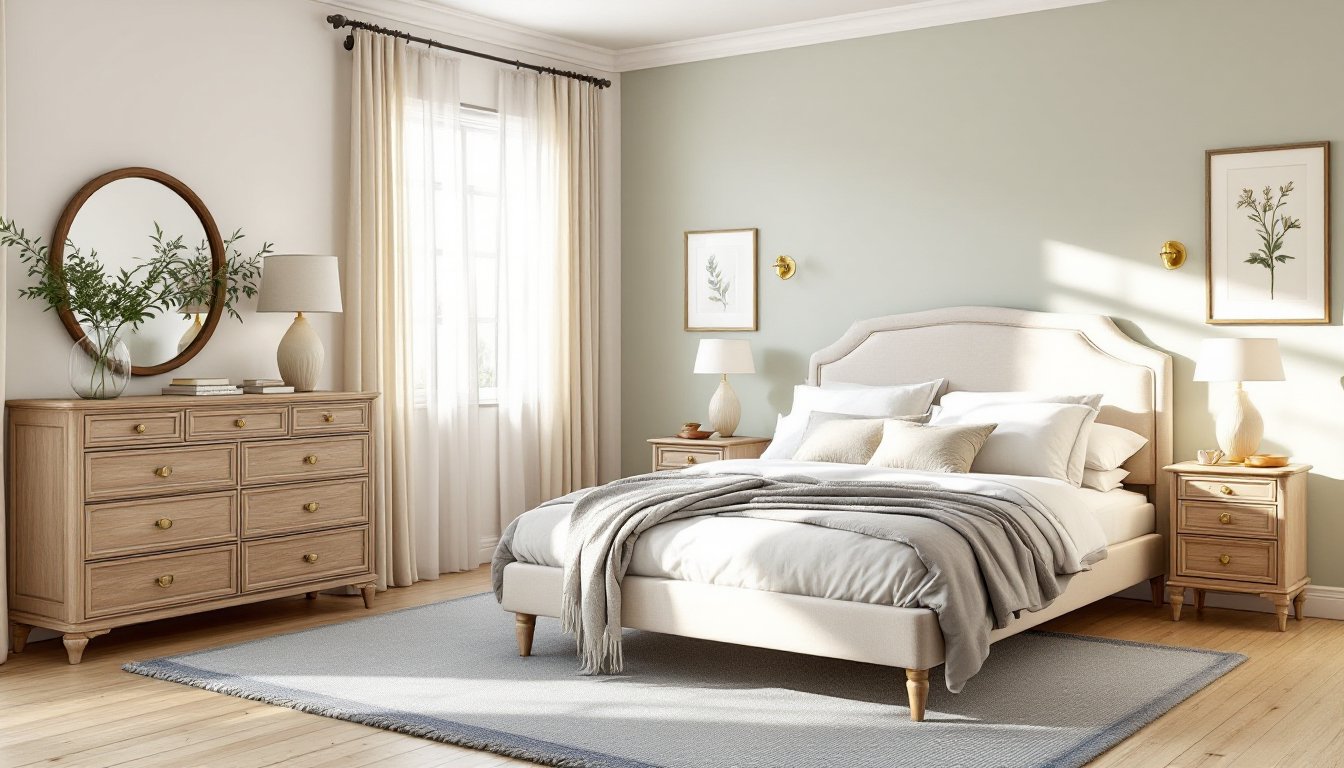
French bedroom furniture has endured as a design staple because it balances sophistication with livability. Whether drawn from Parisian apartments, country estates in Provence, or the refined simplicity of Scandinavian-influenced French styles, these pieces bring understated luxury into everyday spaces. Unlike mass-produced bedroom sets, French furniture emphasizes craftsmanship, proportional design, and materials that age beautifully. This guide breaks down what makes French bedroom furniture distinctive, which pieces matter most, and how to translate the aesthetic into a bedroom that feels both elegant and inviting, without requiring a château to pull it off.
Key Takeaways
- French bedroom furniture achieves sophistication through proportion, quality craftsmanship, and restrained design rather than ornamental excess or mass-produced aesthetics.
- Essential French bedroom pieces include solid wood bed frames with visible joinery, dressers with graduated drawers and subtle hardware, and storage solutions that prioritize quality materials and clean lines.
- A neutral color palette of whites, creams, grays, and warm neutrals—paired with layered, soft lighting—creates the calm foundation that defines French bedroom design.
- Styling French bedroom furniture successfully requires ruthless editing: minimize visible surface clutter, arrange decorative items loosely with negative space, and choose only pieces that feel intentional and well-made.
- Natural materials like linen, cotton, solid wood, and aged brass finishes work together in French bedrooms to build warmth and texture without appearing rustic or artificially aged.
What Makes French Bedroom Furniture Distinctive
French bedroom furniture distinguishes itself through proportion, materials, and a deliberate rejection of unnecessary ornamentation. The style draws from centuries of French design tradition, from Louis XVI’s neoclassical restraint to the curvaceous forms of rococo, but modern French furniture strips away excess in favor of clean lines and purposeful detail.
Key characteristics include turned legs (often tapered or cabriole-style), curved rails and frames, and paneled construction visible on headboards and case pieces. Materials matter: solid wood, typically birch, beech, or walnut, is standard rather than veneer-over-particleboard. Finishes tend toward muted tones, soft whites, greige, pale gray, or natural wood, that develop patina over time rather than looking plastic or synthetic.
Detail work is restrained but intentional. French pieces might feature subtle carving, curved edges (called roundovers in woodworking), or simple hardware in aged brass or iron. There’s no gilding or heavy upholstery unless it’s a specific design reference. The overall effect reads as refined without being showy. This distinction matters: French furniture borrows from high-style periods but applies practical editing. It’s meant to be lived with, not displayed like museum pieces.
Finally, French bedroom furniture prioritizes negative space. Beds are frames with breathing room underneath, not massive box springs wrapped in platform bases. Dressers have open surfaces, not clutter-catching tops. This restraint, both visual and physical, is what prevents a French-inspired bedroom from feeling cluttered or overwrought.
Essential Pieces for a French Bedroom
Beds and Headboards
The bed is the anchor of any French bedroom, and the headboard is its visual statement. French beds typically feature solid wood frames with either a low footboard or no footboard at all. Headboards range from simple paneled designs to upholstered versions in linen or cotton, rarely quilted or buttoned in modern interpretations.
Look for beds with turned or tapered legs, ideally showing the full depth of the frame. Avoid platform bases that hide the legs entirely: the wood joinery and leg detail are part of the design language. Standard mattress dimensions work fine, a queen or full is typical for residential bedrooms, but the frame itself should feel proportional. A bed frame that’s visually heavy or oversized relative to the room will read as clumsy rather than elegant.
Upholstered headboards, if chosen, work best in neutral linen, linen-cotton blends, or cotton velvet in soft gray, cream, or white. Nailhead trim is optional: simple tailored edges without decorative hardware look cleaner and more contemporary. The headboard height should align with the wall, typically 48 to 54 inches from the floor, rather than extending dramatically to the ceiling.
If budget limits a full bed frame replacement, a standalone wooden headboard attached to an existing bed can create the illusion without the cost of a new frame.
Dressers and Storage Solutions
French bedroom storage centers on the dresser, and this piece carries significant weight in the overall aesthetic. Authentic French dressers typically have five or six drawers arranged in a graduated pattern: smaller drawers at the top, deeper drawers toward the bottom. Hardware is subtle, simple brass pulls, wooden knobs, or hidden finger grooves in the drawer face.
Material construction is visible and intentional. A solid wood dresser with a veneered top (not a solid wood top, which would be unnecessarily expensive and less stable across seasons) is standard. The sides and back may be solid or plywood, but drawer fronts and visible surfaces should read as quality wood. French gray, whitewashed, or natural finishes work better than high-gloss or heavily stained pieces.
Size matters in proportion to your room. A dresser that’s too low and wide will ground a bedroom, while one that’s too tall and narrow can make the space feel cramped. Aim for pieces roughly 32 to 36 inches tall and 48 to 60 inches wide, dimensions that offer practical storage without visual weight.
Alternative storage includes tall armoires (a traditional French form), which provide vertical storage without consuming floor space. A smaller chest of drawers paired with wall-mounted shelving or a narrow console table can also work if full-size dressers don’t fit. The key is choosing pieces with visible wood construction and avoiding chunky, modern flat-pack furniture that reads as out of place in a French-styled room.
Design Elements and Color Palettes
French bedrooms succeed or fail largely on color restraint. The foundational palette centers on whites, creams, grays, and warm neutrals, greige (a gray-beige hybrid), dove gray, or off-white, with wood tones providing warmth. This isn’t minimalism: it’s a neutral foundation that lets quality craftsmanship and texture speak.
Wall color sets the tone. Many French bedrooms use soft white or very pale gray on three walls, with the fourth (often the wall behind the bed) in a slightly warmer or deeper neutral, maybe warm greige, pale sage, or a barely-there blush tone. Wallpaper, if used, follows the same restraint: small-scale florals, subtle damask patterns, or tone-on-tone textures rather than bold graphics or busy prints.
Textiles introduce color and softness without noise. Bedding in white linen, cream cotton, or soft gray creates a calm foundation. Layering happens with a subtle throw, a decorative pillow or two, and perhaps a bed runner in a neutral or muted tone. Curtains in linen or linen-cotton blends, usually white or cream, filter light without blocking it entirely. Sheer panels layered under heavier fabric add dimension and romance without feeling fussy.
Accent colors appear sparingly, maybe a small area rug in pale blue-gray or warm taupe, or a single painted nightstand in a muted sage or soft blue. One or two pieces with subtle pattern (a small mirror frame, a simple chair) add personality without chaos. Metal finishes lean toward aged brass, brushed nickel, or matte black, not chrome or shiny gold.
Lighting is crucial and often overlooked. French bedrooms rely on soft, layered light: a subtle overhead fixture (often a simple chandelier with fabric shade or a flush mount), paired bedside lamps in brass or ceramic, and perhaps a wall-mounted reading light. Avoid recessed downlights or bright LED fixtures: they kill the warm, refined atmosphere that French design depends on.
How to Style Your French Bedroom
Styling a French bedroom is about editing, not adding. Start by removing anything excess: plastic storage, clunky electronics visible on surfaces, or decorative items that feel generic or mass-produced. French rooms breathe.
On the dresser, a simple oval mirror (wood-framed, naturally), a small lamp, and perhaps a decorative box or single vase for fresh flowers creates the right balance. Avoid arranging decorative items in threes or in a rigid grid: instead, group them loosely on one side of the surface, leaving open space on the other. A simple wooden tray can corral smaller items, jewelry box, candle, a single photo in a simple frame.
On nightstands, keep surfaces minimal: a lamp, a small dish for keys or glasses, and perhaps a single book. A drawer below stores nighttime necessities out of sight. Resist the urge to fill every surface with candles, plants, or decorative objects. Restraint is what reads as sophisticated.
Wall decor should be sparse. One framed botanical print, a simple wooden shelf with three or four carefully chosen objects, or a round mirror above the dresser work better than gallery walls or crowded layouts. If art is hung, frames should be simple wood or metal, nothing ornate or overly decorative. Botanical or architectural prints, historical maps, or simple black-and-white photography fit the aesthetic.
Furniture arrangement matters more than decoration. Ensure the bed isn’t pushed into a corner if possible: some space around it reads as intentional, not space-constrained. Nightstands should match (or at least echo each other in style and height). A small upholstered chair or bench at the foot of the bed adds function and softness without clutter. Storage must be hidden: closed curtains or doors conceal items, while visible storage should contain only items that are inherently beautiful, folded linens, a stack of wool blankets, neatly organized books.
Finally, introduce natural materials subtly. A sisal or jute area rug, wooden hangers in the closet (not plastic), linen curtains, and cotton bedding create texture and warmth without looking rustic or farmhouse-themed. The key distinction is quality and finish: materials should feel curated and well-made, not thrifted or aged artificially for effect.
Conclusion
Building a French bedroom comes down to choosing quality pieces in a restrained color palette, then editing ruthlessly. It’s not about matching bedroom sets or following a single design moment, it’s about investing in solid wood furniture with good proportions, surrounding it with calm colors and textures, and resisting the urge to fill every surface. Done right, a French-inspired bedroom feels timeless, livable, and genuinely restful. The elegance isn’t in showiness: it’s in the thoughtful absence of excess.