
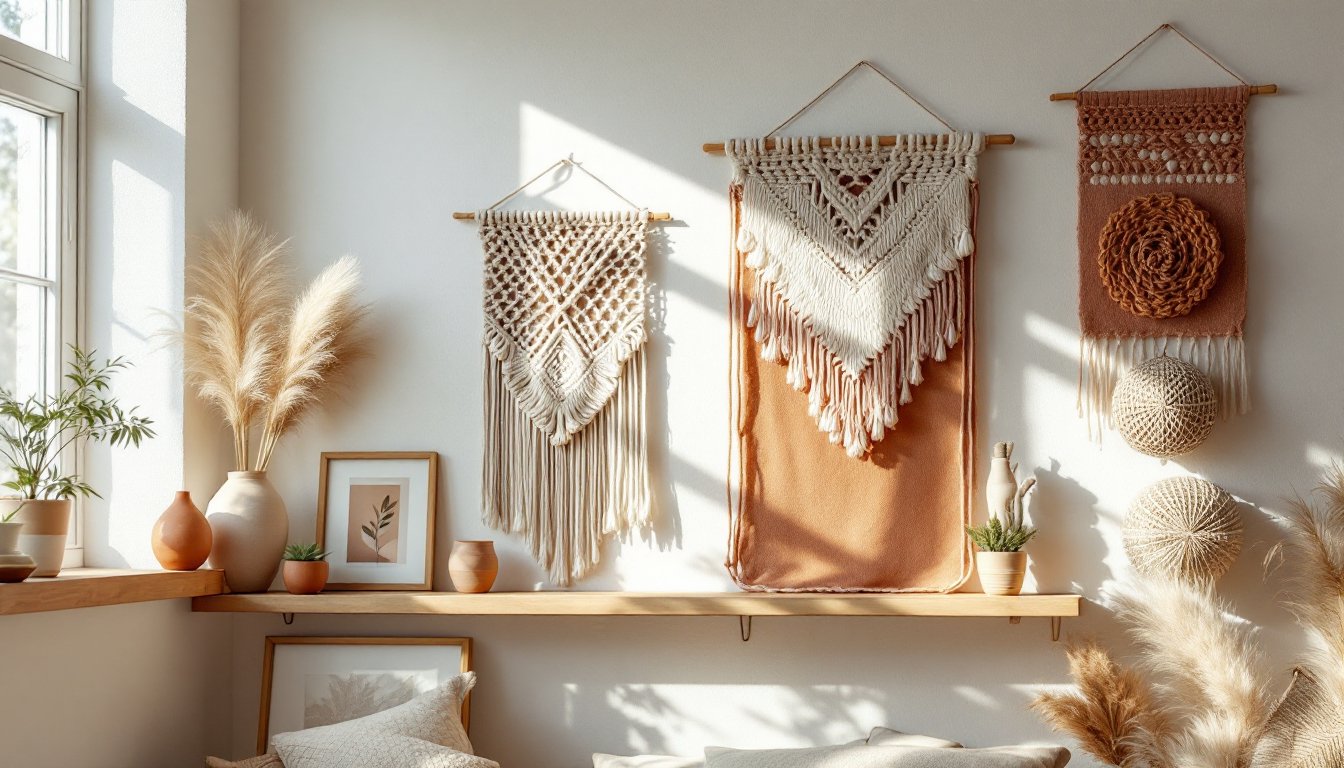
Boho wall decor doesn’t require expensive art galleries or professional designers, it’s built on texture, natural materials, and a relaxed aesthetic that DIYers can nail without specialized skills. Whether someone’s drawn to macramé knots, woven wall hangings, or geometric canvas art, these projects transform plain walls into intentional focal points. The beauty of boho style is its versatility: it pairs with modern minimalism, eclectic vintage finds, and everything in between. This guide breaks down seven approachable DIY boho projects that range from weekend afternoons to medium-effort builds, all designed for hands-on makers who’d rather spend on materials than price tags.
Key Takeaways
- DIY boho wall decor transforms spaces affordably using natural materials and texture—homemade macramé hangings cost $10–$25 versus $60–$150 store-bought alternatives.
- Master four fundamental knots—square knot, half hitch, spiral knot, and lark’s head knot—to create varied macramé designs without specialized skills in 3–4 hours.
- Woven tapestries and painted geometric canvas are beginner-friendly boho projects that require 2–4 hours and basic supplies like yarn, cardboard looms, or acrylic paint.
- Layer boho wall decor asymmetrically using mixed frames, floating shelves, dried botanicals, and macramé for an intentional, lived-in gallery wall aesthetic.
- Boho decor embraces handmade imperfection—uneven knots and minor irregularities add character and work seamlessly in rentals without permanent wall damage.
- Start with small, confidence-building projects like a single macramé piece or 12-inch canvas, then layer multiple boho techniques as skills grow.
Why Boho Wall Decor Works for Any Home
Boho wall decor succeeds because it prioritizes texture and warmth over rigid rules. Natural fibers, cotton, jute, wool, age beautifully and hide minor imperfections that would stand out on pristine white walls. The style also embraces handmade charm: a slightly uneven macramé knot or painted watercolor bleed becomes character, not a flaw.
From a practical standpoint, boho pieces are forgiving. They layer well with existing furnishings, work in rentals (most projects hang without permanent damage), and adapt to changing tastes. A DIYer can add a woven tapestry this month and swap it for a canvas gallery wall next season without major rework.
Boho decor also costs significantly less when built at home. A store-bought macramé hanging runs $60–$150: homemade versions cost $10–$25 in materials. The time investment is reasonable, most projects take 2–6 hours, and the skills transfer across multiple pieces.
Macramé Wall Hangings: A Boho Essential
Macramé is the backbone of boho wall decor, and even though its reputation, it’s surprisingly approachable. The core requires just cotton cord, a wooden dowel or driftwood, and four fundamental knots. Start with unbleached cotton cord in 4–6mm diameter, thicker cord is easier to work with than thin string, and the texture reads better from a distance.
Materials needed:
- Unbleached cotton cord (4–6mm, roughly 30–50 feet per hanging)
- Wooden dowel or driftwood (8–12 inches long)
- Scissors
- Measuring tape
- Masking tape (to mark cord sections)
- Optional: beads, feathers, or wooden rings for accents
Tools needed:
- Scissors or rotary cutter (optional)
- Clipboard or tension rod to hold work steady
Cut cord strands to roughly twice the desired final length, a 24-inch hanging typically requires 4–5 foot strands. Double them over the dowel using a lark’s head knot (the foundation). From there, the three essential knots, square knots, half hitches, and spiral knots, create all variations. Online video tutorials are invaluable here: knot patterns are visual, and text descriptions alone confuse most learners.
Getting Started With Basic Knots
The square knot is the workhorse. Two outer cords loop around two center cords in a repeating pattern. It creates structured, diagonal bands that form the bulk of traditional macramé designs. The half hitch produces tighter, more textured sections: it’s used to transition between sections or add detail at edges.
The spiral knot looks complex but is just a repeated half hitch on one side, creating a natural spiral effect. Beginners should practice each knot on a simple scrap of cord before committing to a full hanging.
Common beginner mistakes: pulling cords too tight (work gets stiff and bunches), inconsistent knot spacing, and mixing cord thicknesses mid-project. Stay consistent, work loose, and remember that minor irregularities add to the handmade appeal. A finished hanging should take 3–4 hours: don’t rush it.
Woven Tapestries and Fabric Art
Woven wall tapestries offer boho texture without learning macramé knots. A basic wall weaving works on a simple frame loom, a stretched piece of thick cardboard, wood stretchers, or a purpose-built loom, with yarn warped (strung) vertically and then woven horizontally.
Materials needed:
- Yarn in multiple colors and weights (cotton, wool, jute, or blends)
- Cardboard, wood strips, or a small frame loom
- Dowel or driftwood for hanging
- Weaving needle or blunt tapestry needle
For a cardboard loom, cut notches ½-inch apart along the top and bottom edges, then string warp yarn through. Weave yarn and fabric scraps (cotton, linen, even old t-shirts) through the warp in alternating over-under patterns. Vary yarn thickness, weave direction, and colors to build visual interest. A 12×16-inch weaving takes about 2–3 hours.
The finished piece slides off the loom: tie warp strands together at top and bottom for a fringed edge, or secure them to a dowel for a cleaner look. Woven tapestries photograph beautifully and feel substantial on walls. They’re also low-waste projects, leftover yarn and fabric scraps become texture and depth rather than trash.
Creating Gallery Walls With Natural Elements
A boho gallery wall layers framed pieces with unframed elements: pressed botanicals, macramé, woven fragments, and dried flowers. The key is asymmetry and varied sizing, no grid pattern.
Materials needed:
- Frames (mix sizes, finishes: natural wood, rattan, metal)
- Prints or pressed plants
- Floating shelves or ledges
- Wall anchors and nails
- Twine, wire, or small hooks
- Dried flowers, branches, or pampas grass
Before hanging anything, lay the arrangement on the floor or on kraft paper taped to the wall. Play with spacing and overlap, boho favors a lived-in, intentional clustered look rather than breathing room between pieces.
Mix hanging methods: some pieces on nails, some on floating shelves, some suspended from wire or twine. A small floating shelf (8–12 inches) holds lightweight objects like terracotta, small plants, or decor items. Dried pampas grass or wheat bundles tucked into corners add organic movement.
When hanging, confirm walls are clear of studs and utilities using a stud finder and electronic scanner. Use appropriate anchors for wall type, drywall anchors for drywall, masonry anchors for brick or concrete. Heavier frames need studs or heavy-duty anchors: test before fully hanging.
Painted Canvas and Geometric Designs
Geometric and abstract painted canvas is fast, forgiving, and deeply boho. A DIYer doesn’t need artistic skill, geometry relies on straight lines and color blocking.
Materials needed:
- Canvas (pre-stretched from any craft store, 11×14 inches or larger)
- Acrylic paint in earth tones (terracotta, ochre, cream, dusty rose, charcoal)
- Paintbrushes (1-inch flat, detail round)
- Pencil and ruler
- Low-tack painter’s tape
- Water cup and paper towels
Tools needed:
- Ruler
- Pencil
- Painter’s tape
- Brush care supplies
Sketch a light pencil design, triangles, concentric circles, or abstract blocked patterns. Tape off sections with painter’s tape to ensure clean edges. Boho palettes favor earthy, muted tones: avoid harsh primaries. Apply one coat, let it dry completely, then add details or a second layer.
Common mistakes: rushing drying time between coats (paint appears muddy), using regular masking tape that tears canvas, or overworking paint (blending reduces the graphic quality). A 3-4 hour project yields a custom 24×30-inch statement piece for roughly $15 in materials. Mount it on a wire system, frame it lightly, or hang it from twine.
Conclusion
DIY boho wall decor proves that intentional, textured spaces don’t require professional budgets. These seven projects, macramé, weaving, gallery walls, and painted canvas, are entry points, not final destinations. Stack multiple techniques on one wall. Start small: a single macramé piece or 12-inch canvas, then layer as confidence grows. Boho style rewards handmade imperfection and material honesty. That’s not just an aesthetic, it’s permission to make, try again, and trust the process.