
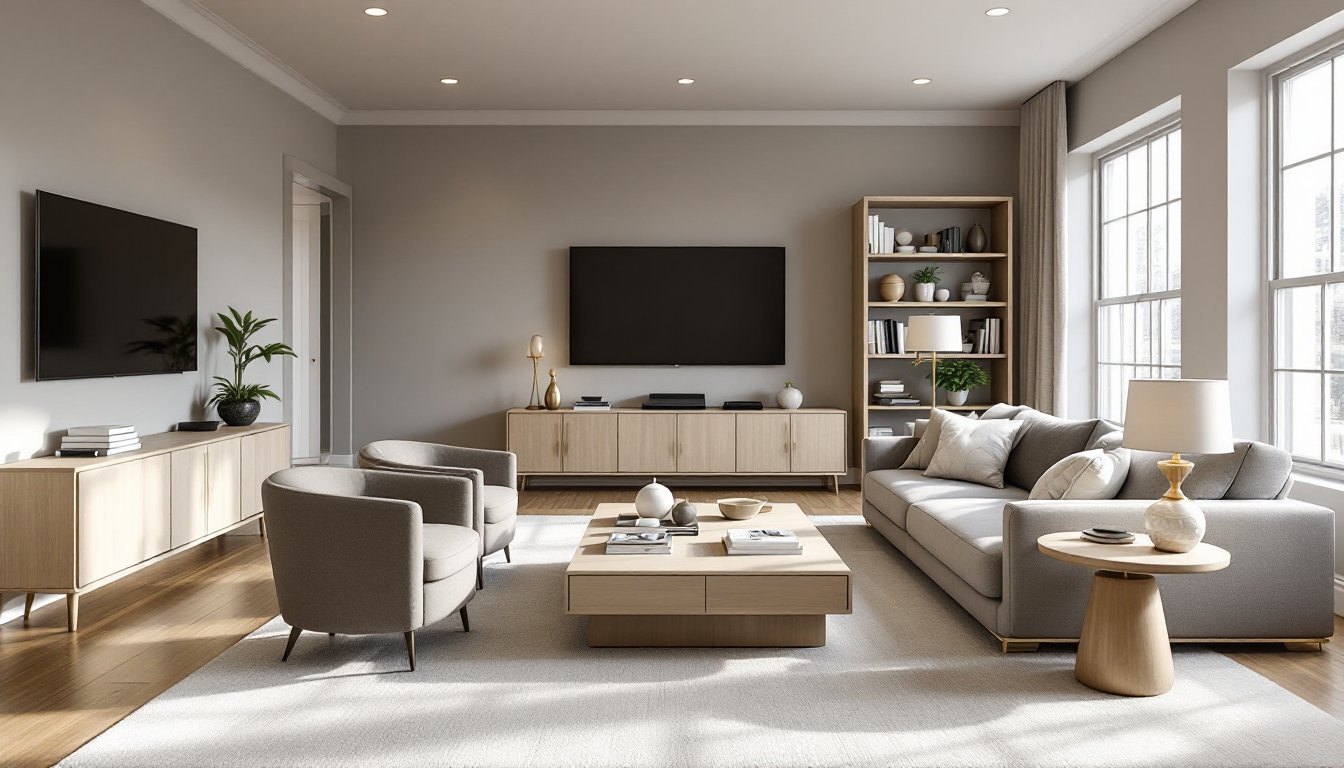
A well-arranged living room doesn’t happen by accident, it’s the result of thoughtful furniture placement that balances form and function. Whether someone’s working with a compact apartment or a sprawling great room, the principles of living room furniture placement remain the same: create zones for conversation and relaxation, maximize traffic flow, and anchor the space with intentional design choices. The right layout transforms a room from a collection of pieces into a cohesive gathering space. This guide walks through the strategic decisions that separate cluttered rooms from inviting ones, starting with identifying focal points and building a functional arrangement around them.
Key Takeaways
- Identify your room’s primary focal point—whether a fireplace, window view, or TV—and arrange primary seating to face it, as living room furniture placement begins with this anchor.
- Position seating in an oval or rectangular formation rather than a straight line to create natural sightlines where people face each other, maximizing conversation comfort.
- Maintain at least 18 inches of clearance on either side of major walking routes and keep seating roughly 8 to 10 feet apart to ensure unobstructed traffic flow and natural conversation distance.
- Place coffee tables 14 to 18 inches from the sofa edge and position side tables at elbow height (24 to 26 inches) for easy access without creating tripping hazards.
- Use asymmetrical balance by distributing visual weight through varied heights, textures, and piece sizes rather than matching pairs, and float seating away from walls to create intimacy and prevent the space from feeling cramped.
- Leave negative space throughout the room by furnishing only 40 to 50 percent of the floor space and adding layered lighting (table, floor, and wall sconces) to create visual depth and highlight different zones.
Start With Your Room’s Focal Point
Every living room has a natural focal point, a feature that draws the eye and anchors the space. Identifying it first makes all other furniture decisions easier. The most common focal points are fireplaces, windows with a view, or a television.
A fireplace or feature wall is ideal because it’s architectural and permanent. Arrange the primary seating directly facing it, creating a natural gathering point. If the room has large windows or exterior views, orient seating to take advantage of natural light and scenery rather than fighting against it. This also reduces glare on screens if there’s a TV in the room.
When the TV is the focal point, which is realistic in most modern homes, mount it at eye level on the wall opposite the main seating area, or use a swivel mount for flexibility. The viewing distance should be roughly 1.5 to 2.5 times the TV’s screen diagonal. A 55-inch TV works best with seating placed 8 to 10 feet away: a 65-inch screen needs 10 to 13 feet. Measure the room before buying or repositioning furniture.
If the room has multiple potential focal points, pick one as primary. Competing focal points create visual confusion and pull attention in conflicting directions, making the space feel unresolved. Secondary focal points, like artwork or a bookshelf, should complement rather than compete with the main anchor.
Arrange Seating for Conversation and Comfort
Seating arrangement determines whether a living room feels welcoming or awkward. The goal is to create intimate conversation zones while accommodating different activities.
Position the primary sofa facing the focal point, then anchor secondary seating (chairs, loveseats, ottomans) in a complementary arrangement. Ideally, seating pieces should form a rough oval or rectangular configuration rather than a straight line. This creates sightlines where people naturally face each other rather than stare straight ahead. A 3-piece sectional works well in larger rooms, but in tighter spaces, a sofa plus two accent chairs in an L-shape achieves the same effect.
Traffic flow matters more than people realize. Avoid placing furniture directly in natural pathways between the entrance and other rooms. If someone has to squeeze past a side table or vault over an ottoman to cross the room, the layout isn’t working. Leave at least 18 inches of clearance on either side of major walking routes.
Seating distance should feel natural for conversation, roughly 8 to 10 feet apart at maximum. If pieces are too far away, people shout across the room: too close, and it feels claustrophobic. Use a tape measure to test distances before committing pieces to their final spot.
Consider scale and proportion when selecting pieces. An oversized sectional can overwhelm a modest bedroom converted into a multi-purpose space, while a small apartment sofa will look lost in a formal living room. The furniture should occupy roughly 40 to 50 percent of the room’s floor space, leaving breathing room and preventing a cramped feel.
Position Tables and Storage Strategically
Coffee Tables and Side Tables
A coffee table anchors the seating arrangement and serves practical purposes, holding drinks, remotes, magazines, and serving as a visual centerpiece. Position it 14 to 18 inches from the edge of the sofa for easy reach without creating a tripping hazard. The table’s height should be within an inch or two of the sofa’s seat height for comfortable arm resting.
Side tables belong beside each seating piece, not randomly scattered. They should be at elbow height when sitting, roughly 24 to 26 inches high, so someone can easily set down a drink or lamp. A console table behind a sofa (if it’s not against a wall) creates additional surface and storage without consuming floor space in the middle of the room.
Size matters. An oversized coffee table can make movement cumbersome: an undersized one looks out of proportion and offers minimal surface. As a rough guide, the table’s length should be about two-thirds the sofa’s length.
Media Consoles and Entertainment Units
Media consoles or entertainment units hold equipment, books, and decor while anchoring the wall opposite primary seating. If the TV is wall-mounted above a console, keep the console depth shallow (12 to 16 inches) so it doesn’t jut into the room and obstruct sightlines.
Consider cable management and ventilation when positioning equipment. Don’t shove the media console tight against the wall if the TV or receiver needs airflow. Leave 3 to 4 inches of clearance behind electronics to prevent overheating. Routing cables through cable clips or a cable box keeps the setup clean and makes future moves easier.
Built-in shelving or a tall entertainment unit with cubbies offers more storage density than a flat console, useful in smaller rooms. The height should frame the wall visually without towering, typically reaching the midpoint between the sofa and ceiling or stopping 12 inches below eye level when seated.
Create Flow and Balance Throughout Your Space
Balance in living room furniture placement isn’t about matching pairs on either side of a sofa, it’s about visual weight distribution. A heavy sectional on one side of the room needs visual counterbalance: perhaps a tall bookshelf, console, or layered side table grouping on the opposite side.
Symmetrical arrangements (matching chairs flanking a sofa, identical tables on both sides) work in formal living rooms with clear focal points, but asymmetrical balance feels more contemporary and natural. Place larger pieces opposite smaller ones, or distribute weight through varied heights and textures rather than duplicates.
Clear sightlines throughout the room prevent it from feeling cluttered. Avoid stacking furniture against walls unless necessary, floating seating creates intimacy and makes the space feel larger. In an open floor plan, define the living room zone by angling furniture toward the focal point rather than pushing everything to perimeter walls.
Lighting affects how the layout is perceived. Overhead fixtures create a general wash: layered lighting, a table lamp, floor lamp, and wall sconce, adds depth and draws attention to different zones. Place lamps on side tables within arm’s reach of seating for practical task lighting and ambiance.
Finally, leave room to breathe. Overloading a space with too many pieces, even if individually scaled correctly, creates visual chaos. Every item should earn its spot through function or intentional design. A well-arranged living room has negative space, empty floor and wall areas that provide visual rest.
Conclusion
Living room furniture placement combines practical strategy with design intuition. Start by identifying the focal point, arrange seating to encourage conversation and clear pathways, position tables for function and proportion, and balance the layout visually throughout. These principles translate across room sizes and styles. Before moving heavy pieces, sketch the layout, measure critical distances, and test traffic flow. A thoughtfully arranged living room becomes the heart of the home, a space that naturally pulls people in and makes them want to stay.