
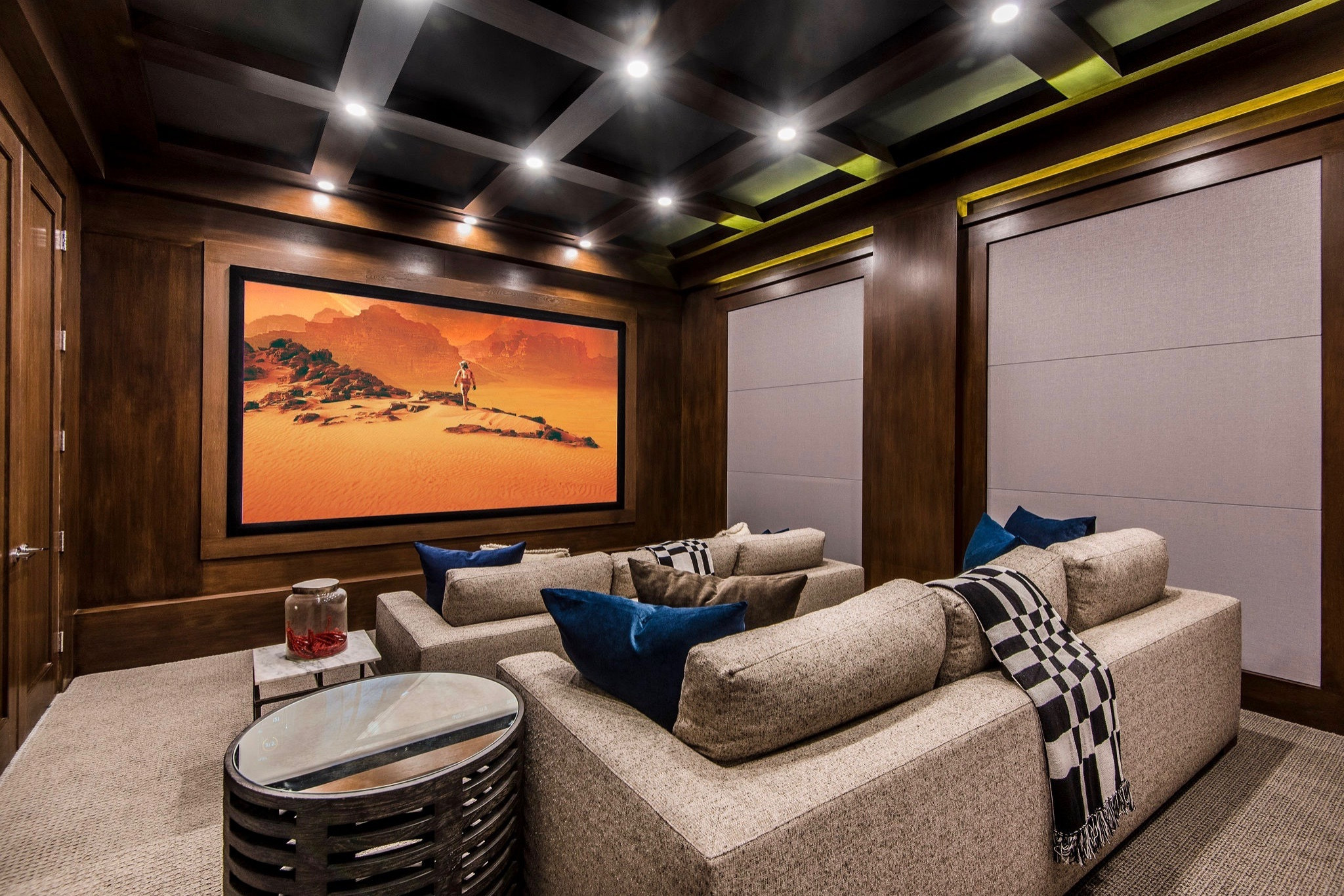
There is a version of a home theater room that is just a big TV in a dark room. And then there is the version people actually want: a space where films feel different, where the sound is physical, where walking in immediately signals that something better than regular TV is about to happen.
The gap between those two versions comes down to a handful of features that separate a room that functions from one that genuinely delivers. None of them requires an unlimited budget. All of them require intentional planning.
Here are the five features that define the ultimate home theater room, and what it actually takes to get each one right.
What Separates a Good Home Theater Room From a Great One
The difference is rarely one big thing. It is the combination of several elements working together so well that the room feels effortless. Get one wrong, and it pulls attention. Get all five right and the room disappears, leaving only the experience.
Feature 1: A Display System Scaled to the Room (Not Just the Wish List)
The ultimate home theater room starts with a display system that fits the space. That sounds obvious. In practice, it is where a lot of builds go wrong.
Screen size is not just a preference. It is a function of the room’s dimensions, the seating distance, and the display technology being used. A screen that is too large for the seating distance forces viewers to track across the image rather than absorb it as a whole. A screen that is too small for the room leaves the experience feeling no different from a living room setup.
The right sizing approach:
- For projector setups, screen width should generally sit between 1.2 and 1.6 times the distance from the screen to the primary seating
- For large-format TVs, 85 to 100 inches works well with seating at 10 to 14 feet
- Screen height should place the center of the image at or just slightly above seated eye level
- In rooms with ambient light, a high-gain projection screen or an OLED TV handles contrast better than a standard projector
The display technology itself comes down to room conditions. Projectors with a 4K laser light source deliver stunning images in controlled darkness and are the closest thing to a true cinematic feel in a home theater room. OLED TVs, meanwhile, offer unmatched contrast in rooms where full blackout is not possible, with blacks that no projector can match in ambient light conditions.
Note: Avoid the temptation to max out screen size against a budget. A 110-inch screen in a room designed for 90 inches will always look like a mistake. Calibrate to the space.
Feature 2: Surround Sound That Fills the Room Without Overwhelming It
Audio is what separates a big-screen room from an ultimate home theater room. The right surround sound system does not just fill space with noise. It creates the sense that sound is coming from exactly where it should be: behind a car driving off-screen, above during a thunderstorm, in front when the dialogue demands it.
A 5.1 system is the entry point for genuine surround sound: front left, center, front right, rear left, rear right, and a subwoofer. Dolby Atmos builds on this with height channels, either ceiling-mounted or upward-firing, that add vertical dimension to the audio. The difference in the right content is not subtle.
What makes surround sound work in a home theater room is not just the equipment. It is placement, calibration, and room treatment working together.
Speaker placement essentials:
- Front left and right speakers should flank the screen at ear level, angled toward the primary listening position
- The center channel sits directly above or below the screen, aligned with the listening axis
- Surround speakers go at ear level on the side walls or slightly behind the listening position, not pointed at the ceiling
- The subwoofer position affects bass response significantly; experimenting with placement before finalizing is worth the effort
Tip: Run the auto-calibration system built into most AV receivers (Audyssey, YPAO, or Dirac Live) after the room is fully furnished. Calibrating an empty room gives different results than calibrating the space as it will actually be used.
Acoustic treatment is the multiplier that most people skip. Bass traps in room corners, panels at first reflection points on side walls, and a diffuser on the rear wall all reduce the acoustic problems that make even good speakers sound mediocre in untreated spaces.
Feature 3: Theater Seating That Makes Two Hours Feel Like Twenty Minutes
Ask anyone who has watched a long film on a poorly chosen couch. By the third act, they are not watching the movie. They are managing their discomfort.
Theater seating in a dedicated home theater room is not a luxury detail. It is the foundation of the entire experience. The right seating keeps viewers comfortable and physically at ease for the full duration of whatever is being watched. The wrong seating turns a two-hour film into something people are relieved to have finished.
Theater seating is designed specifically for this. It differs from standard recliners and sofas in ways that matter over time: higher-density foam that does not compress and sag after an hour, lumbar support calibrated for the reclined viewing position, headrests that hold the neck in a natural angle toward the screen, and recline mechanisms that operate quietly enough that one person adjusting their position does not interrupt everyone else in the row.
What to look for in theater seating:
- Individual power recline controls so each viewer adjusts independently
- Row spacing of at least 48 inches for full recline without impacting the row in front
- Material suited to session length: genuine leather or performance fabric over bonded leather, which gets uncomfortable during extended contact
- Integrated cup holders and armrest storage to eliminate the low-level friction of managing snacks and remotes during a film
- Seat height relative to the screen center to ensure comfortable viewing without neck strain over a full runtime
For rooms with two rows, a raised platform for the rear row is essential. Without it, rear viewers spend the film looking at the back of heads rather than the screen. The riser height depends on seat height and screen position, but typically sits between 8 and 12 inches.
Worth knowing: The difference between watching a film in well-chosen theater seating versus a standard couch is felt most clearly in the second hour. That is when inferior support becomes impossible to ignore, and good support becomes invisible.
Feature 4: Lighting Designed Around Viewing, Not Just the Room
A home theater room without a proper lighting plan is a room with a brightness problem waiting to happen. Overhead lights that flood the screen surface, a lamp positioned behind the display, or windows that let in afternoon light all compromise the image in ways that no amount of display quality can compensate for.
The ultimate home theater room treats lighting as a system with multiple layers, each serving a different purpose.
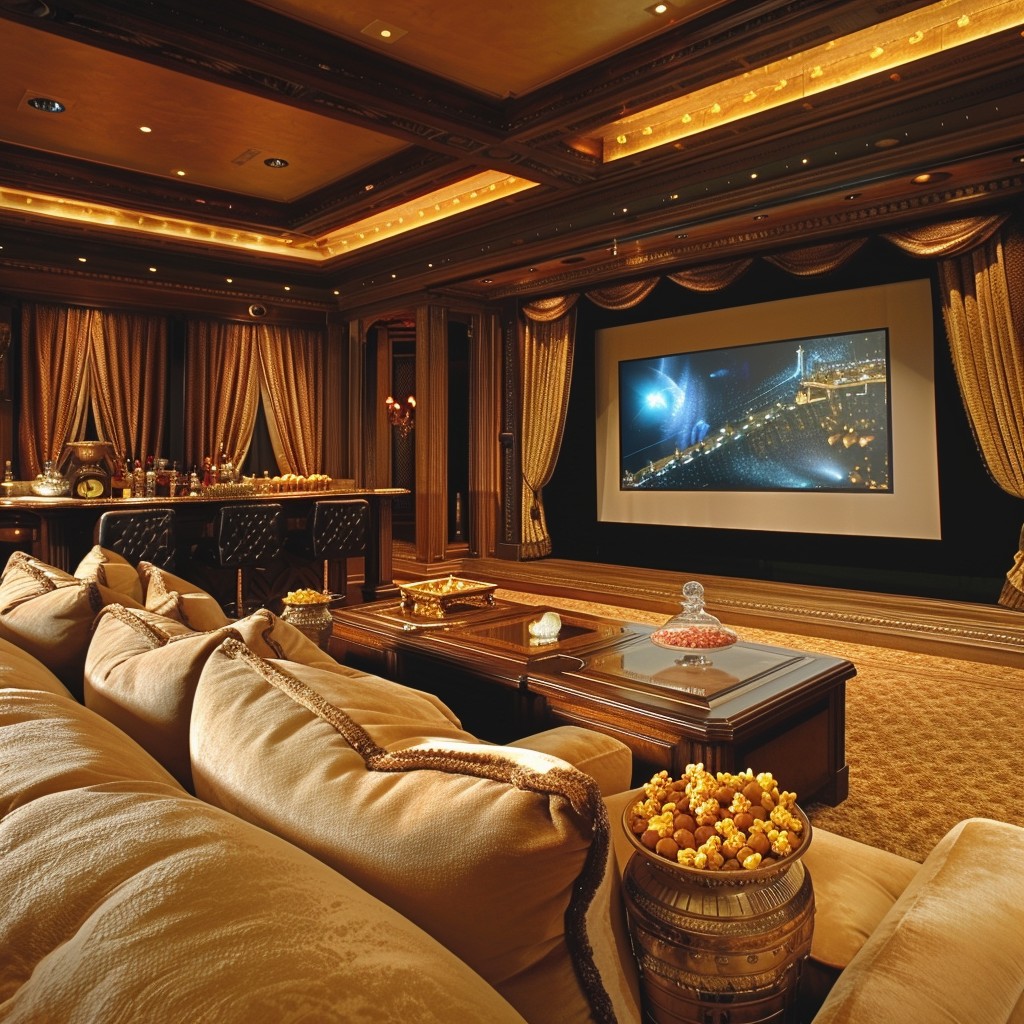
A complete home theater lighting setup:
- Blackout window treatments as the baseline, blocking external light completely when viewing. Motorized blackout blinds or roller shades behind decorative curtains offer the cleanest solution for rooms with windows that cannot be removed from the equation.
- Bias lighting behind the screen, a strip of LED lighting that creates a soft glow around the display. This reduces eye strain during viewing, improves perceived contrast on the screen, and makes the room feel more polished and intentional. Philips Hue and Govee both offer systems that sync to on-screen content for a more dynamic effect.
- Dimmable indirect overhead lighting for pre-show and intermission use. Lights pointed directly at the screen surface create glare. Indirect fixtures or directional lights aimed at walls and ceilings rather than the screen surface keep the room usable between viewings without damaging the image during them.
- Aisle or step lighting along the floor perimeter for safe movement in low light. In rooms with tiered seating, step lighting on risers is a practical safety measure as well as an aesthetic one.
- Smart control integration that ties the whole lighting setup to a single input: a dedicated remote, a wall panel, or a voice command. “Theater mode” should be one action, not a sequence of adjustments.
Feature 5: Acoustic Treatment That Makes the Room Sound Like It Was Built for This
The one feature that most home theater rooms are missing, and the one that makes the most difference relative to its cost, is proper acoustic treatment.
Without it, even excellent speakers sound mediocre. Dialogue gets muddied by reflections off hard surfaces. Bass builds up unevenly, so some seats sound full, and others sound thin. The room works against the audio system rather than supporting it.
With basic treatment in the right places, the same speakers sound noticeably clearer, more defined, and more spatially accurate. The improvement does not require covering every wall in foam. It requires treating the specific problem areas.
The high-impact treatment points in any home theater room:
- Room corners: Where bass accumulates. Bass traps here reduce the low-frequency buildup that makes bass sound boomy and undefined regardless of subwoofer quality.
- Side wall first reflection points: The spots on the left and right walls where sound from the front speakers bounces toward the listening position before the direct sound arrives. Panels here tighten the stereo image and improve dialogue clarity significantly.
- Ceiling above the listening position: A reflection point that is often ignored. A panel here improves the vertical separation that Dolby Atmos height channels depend on.
- Rear wall: A diffuser rather than an absorber works best here, scattering sound evenly rather than killing all reflection and making the room feel acoustically dead.
Practical note: DIY acoustic panels using rigid fiberglass or rockwool insulation in a simple wooden frame are inexpensive and perform as well as commercial products costing several times more. For a home theater room, this is one of the areas where doing it yourself is genuinely cost-effective without sacrificing quality.
The Ultimate Home Theater Room Is the Sum of Its Parts
No single feature on this list delivers the ultimate home theater room on its own. The display needs the right room dimensions. The audio needs both the right equipment and acoustic treatment to support it. The theater seating needs the right position to be worth having. The lighting needs all its layers to function as a system. The acoustics underpin everything else.
What makes a home theater room genuinely great is the way these five features reinforce each other. When they all work together, the room stops feeling like a setup and starts feeling like a destination. That is worth planning for.